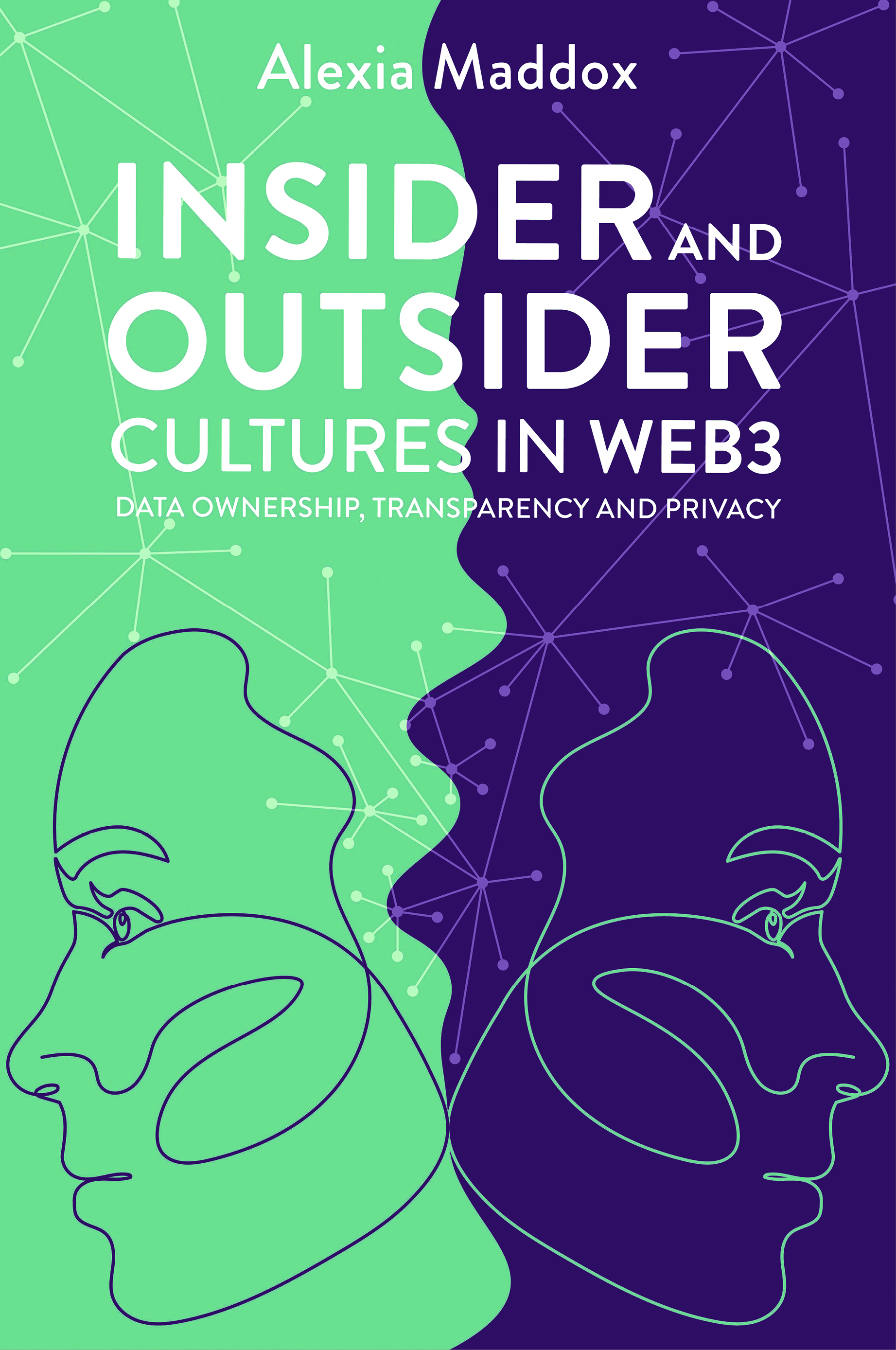
Insider and Outsider Cultures in Web3
The headlines are filled with stories about Web3, cryptocurrencies, and the metaverse. Some herald these technologies as our salvation from Big Tech’s dominance, while others dismiss them as elaborate scams. But what if there’s a more nuanced story to tell?
After a decade of researching digital communities and emerging technologies, I’m excited to announce the release of my new book “Insider and Outsider Cultures in Web3: Data Ownership, Transparency and Privacy.” This work cuts through the hype to examine what Web3 technologies actually tell us about our digital future.
Why This Book Matters Now
We’re at a critical moment in the evolution of the internet. Issues of data privacy, digital surveillance, and platform control have become kitchen table conversations. Meanwhile, Web3 has emerged as a controversial answer to these challenges, promising a more decentralised and user-controlled digital future.
But rather than taking sides in the Web3 debate, my book uses these technologies as a lens to understand what people actually want from the future internet. Through extensive research and real-world case studies, I explore how Web3 serves as “social proof” – evidence of our collective desires for greater data ownership, privacy, and freedom from centralised control.
What You’ll Find Inside
The book takes you on a journey through the Web3 landscape, from its origins in cryptographic cultures to its current experimental implementations. You’ll discover:
- How early crypto communities shaped Web3’s development and values
- Why entrepreneurs and regulators often talk past each other in this space
- What happened when Bitcoin became legal tender in El Salvador
- How decentralised infrastructure projects are reimagining the internet
- What Web3 tells us about inclusion and exclusion in digital futures
Rather than offering simple answers, the book examines the tensions between idealistic visions and practical challenges, between insider and outsider perspectives, and between innovation and regulation.
Beyond the Technology
This isn’t just a book about blockchain or cryptocurrencies. It’s an exploration of how we might reshape our digital world to better serve human needs and values. Through careful analysis of real-world cases, I illuminate the broader questions Web3 raises about:
- Who should control our digital lives and data?
- How can we balance innovation with protection?
- What does genuine digital inclusion look like?
- How might we govern emerging technologies?
- What role should communities play in shaping digital futures?
A Call to Action
The future of the internet isn’t set in stone – it will be shaped by our collective choices and actions. This book provides the contextual understanding needed to participate meaningfully in these crucial discussions.
Whether you’re a technology enthusiast, policy maker, entrepreneur, or simply someone who cares about our digital future, you’ll find insights to inform your engagement with these important issues. The book offers practical considerations for:
- Developing flexible regulatory frameworks
- Fostering responsible innovation
- Promoting genuine inclusion
- Building sustainable digital infrastructure
- Engaging broader public participation
Join the Conversation
As we navigate the next evolution of the internet, we need informed and nuanced discussions about our digital future. This book contributes to that dialogue by moving beyond simplistic narratives to examine the real possibilities and challenges Web3 presents.
I look forward to hearing your thoughts and engaging in discussions about the future we want to build. You can find the book here – ask your local library to stock it.
Keep an eye out for launch events that I’ll share at the start of 2025
 alexiamaddox